



How to Choose a Pressure Regulator
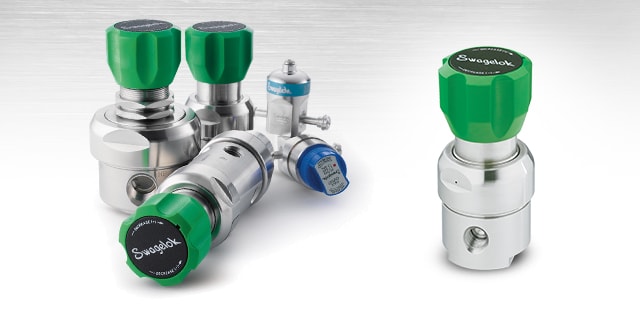
What is a Pressure Regulator and How to Choose One
Pressure regulators play a crucial role in many industrial fluid and instrumentation systems, helping to maintain or control desired pressure and flow in response to system changes. It is important to select the right regulator to keep the system operating safely and as intended—the wrong choice can lead to inefficiency, poor performance, frequent troubleshooting, and potential safety hazards.
Knowing how to choose a regulator requires an understanding of the different types of regulators, how they function, and how they can be applied to meet the needs of your system. Read on to learn more about pressure regulators, their functionality, and how to determine the best option for your system needs.
What Is a Pressure Regulator?
At its most basic, a pressure regulator is a mechanical device designed to control either upstream or downstream pressure in response to changes in the system. These changes might include fluctuations in flow, pressure, temperature, or other factors that may occur during regular system operation.
What is the Purpose of a Pressure Regulator?
The regulator’s job is to maintain your desired system pressure. Importantly, regulators are different than valves, which control system flow rates and do not self-adjust. Regulators control pressure, not flow, and are self-adjusting.
What Are the Two Main Types of Pressure Regulators and How Do They Work?
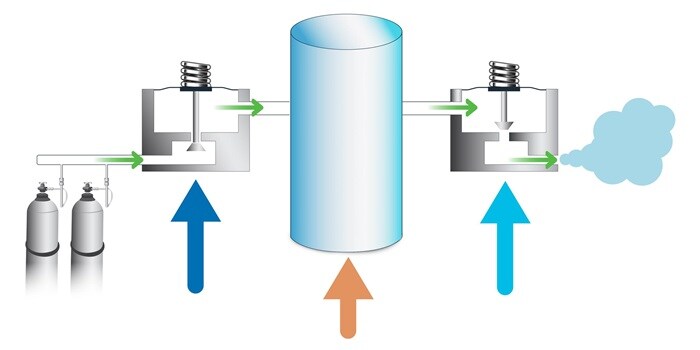
There are two primary types of regulators: pressure-reducing regulators and back-pressure regulators.
- Pressure-reducing regulators control pressure to the process by sensing the outlet pressure and controlling their own downstream pressure
- Back-pressure regulators control pressure from the process by sensing the inlet pressure and controlling pressure from upstream
Your ideal choice of regulator depends on your process requirements. For example, if you need to reduce pressure from a high-pressure source before system media reaches the main process, a pressure-reducing regulator will do the job. Back-pressure regulators, by contrast, can help control and maintain upstream pressure by releasing excess pressure if system conditions cause levels to become higher than desired. Used in the right context, each type can help you maintain the desired pressures throughout your system. You can learn more about the types of pressure regulators in our detailed blog post.
How Do Pressure Regulators Work?
Pressure regulators work by using three important components that help them regulate pressure:
- A control element, including a seat and poppet. The seat helps contain pressure and prevents fluid from leaking to the opposite side of the regulator when flow is closed. Together with the seat, the poppet completes the sealing process while the system is flowing.
- A sensing element, typically a diaphragm or piston. The sensing element allows the poppet to rise and fall in the seat, controlling inlet or outlet pressure.
- A loading element. Regulators may be spring-loaded or dome-loaded, depending on the application. The loading element applies a downward, balancing force on top of the diaphragm.
These elements work together to create the desired pressure control. The piston or diaphragm senses upstream (inlet) pressure and downstream (outlet) pressure. The sensing element then tries to find a balance with the set force from the loading element, which is adjusted by user via a handle or other turning mechanism. The sensing element will allow the poppet to either open or close from the seat. These elements work together to remain in balance and achieve set pressure. If one changes, some other force must also change to restore balance.
Back Pressure Regulator vs Pressure Reducing Regulator
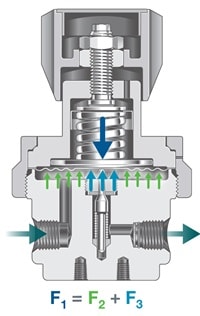
Back-pressure regulators function similarly to pressure-reducing regulators. They must balance spring force (F1), inlet pressure force (F2), and outlet pressure force (F3), as shown in Figure 2. Here, the spring force must equal the combined force of the inlet pressure force and the outlet pressure force.
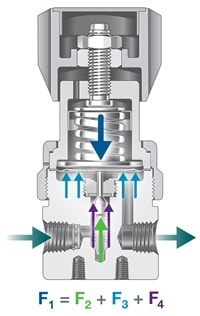
In pressure-reducing regulators, four different forces must be balanced, as shown in Figure 1. These include loading force (F1), inlet spring force (F2), outlet pressure force (F3), and inlet pressure force (F4). Total loading force must be equal to the combination of inlet spring force, outlet pressure force, and inlet pressure force.
How to Choose a Regulator
Choosing the right regulator starts with understanding how regulators function, which can help you evaluate how to match different regulator characteristics to the needs of your system. Here are some important questions to ask when choosing a regulator.
How Do I Determine the Correct Size Pressure Regulator Based on My System’s Flow Rate and Pressure Requirements?
The correct size regulator is generally determined by the rate of flow in your system, and installing a properly sized one is key to maintaining desired pressure. Larger regulators can handle higher flows while effectively controlling pressure, while smaller regulators are effective for lower-flow velocities. Sizing of regulator components is important, too. For example, it is more effective to control lower-pressure applications with a larger diaphragm or piston. All components should be sized appropriately based on your system’s requirements.
How Do I Select a Pressure Regulator for System Pressure?
Since the primary function of your regulator is to manage system pressures, it is critical to ensure that your selection is appropriately rated for maximum, minimum, and operating system pressures. Pressure control ranges are typically prominently featured in regulator product specifications given their importance to proper regulator selection.
Can the Regulator Withstand System Temperature Ranges?
Since industrial processes can range in temperature, you should be confident that your choice of regulator can stand up to the typical operating conditions expected. Environmental factors are a consideration, as well as fluid temperatures and factors such as the Joule-Thomson effect, which causes rapid cooling due to pressure drops.
What Type of Pressure Regulator Is Best for My Process Sensitivity—Spring-Loaded or Dome-Loaded?
The sensitivity of your process plays a role in determining the best mode of control to choose in your regulators. As noted, most regulators are either spring-loaded or dome-loaded. Spring-loaded regulators are controlled by an operator turning an external knob, which controls the spring’s force on the sensing element. Dome-loaded regulators, by contrast, use fluid pressure from within the system to provide the set pressure on the sensing element. While spring-loaded regulators are more common and tend to be more familiar for operators, dome-loaded regulators can help improve precision in applications that require it and may benefit automated applications.
How Do I Choose a Pressure Regulator That’s Compatible With My System Media and Materials?
The materials that comprise the elements of your regulator and your system media should all be compatible to enhance component longevity and avoid downtime. While some natural deterioration of rubber and elastomer components is expected, certain system media may contribute to accelerated deterioration and premature regulator failure. You can learn more about chemical compatibility of elastomer seals and other regulator components in our materials science training courses.
Watch the Video Below to Learn More About Selecting a Regulator.
With a deeper working knowledge of the types of pressure regulators available and how they function, you will be better equipped to make the right selection. Your regulator supplier should be able to provide you with sizing information, pressure and flow requirements, temperature ranges, and the correct mode of control for your system needs. You can start the selection process by comparing different regulators in different applications with our Regulator Flow Curve Generator, then following up with a local pressure control specialist for more information.
However, the specific needs of your system go well beyond the contents of this blog. Available training opportunities can help fluid system professionals gain a more thorough understanding of how the right regulator can help increase safety while improving efficiency.
In addition, your regulator supplier should be able to help guide you toward the correct choice by working to understand your system requirements. Our experienced specialists can provide that guidance, drawing upon well-rounded application knowledge and engineering support to arrive at the appropriate choice for your system. If you’re interested in optimizing regulator performance, contact our team of pressure control specialists to start a conversation.
Related Products
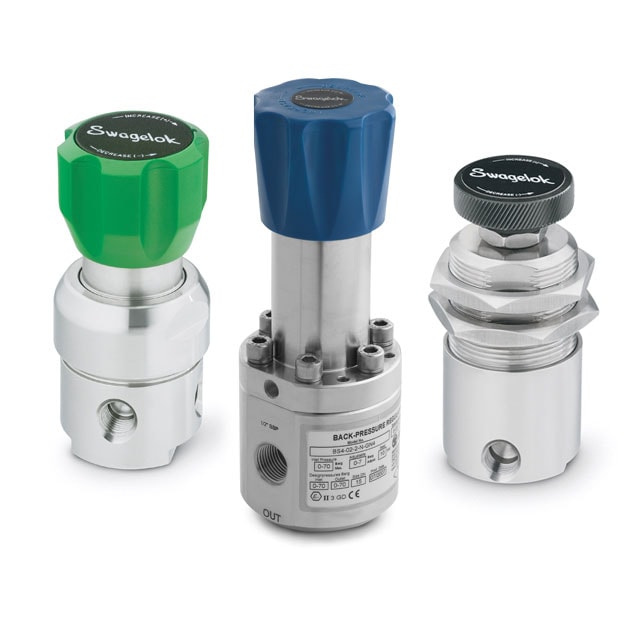
Back-Pressure Regulators, Spring-Loaded
Ensure consistent output by precisely controlling inlet pressure.
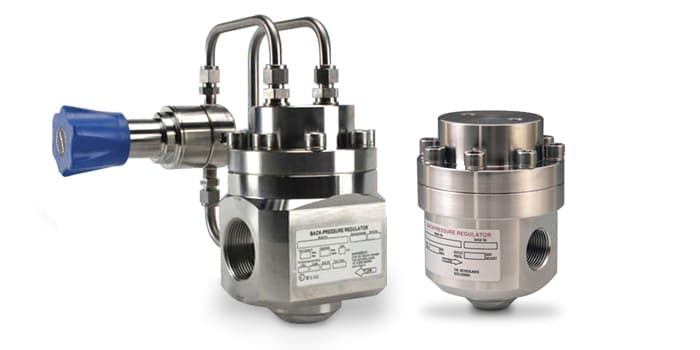
Back-Pressure Regulators, Dome-Loaded
Protect sensitive equipment by regulating upstream pressure under changing flow conditions.